Day-by-Day Itinerary
The Shores of Loch Lomond
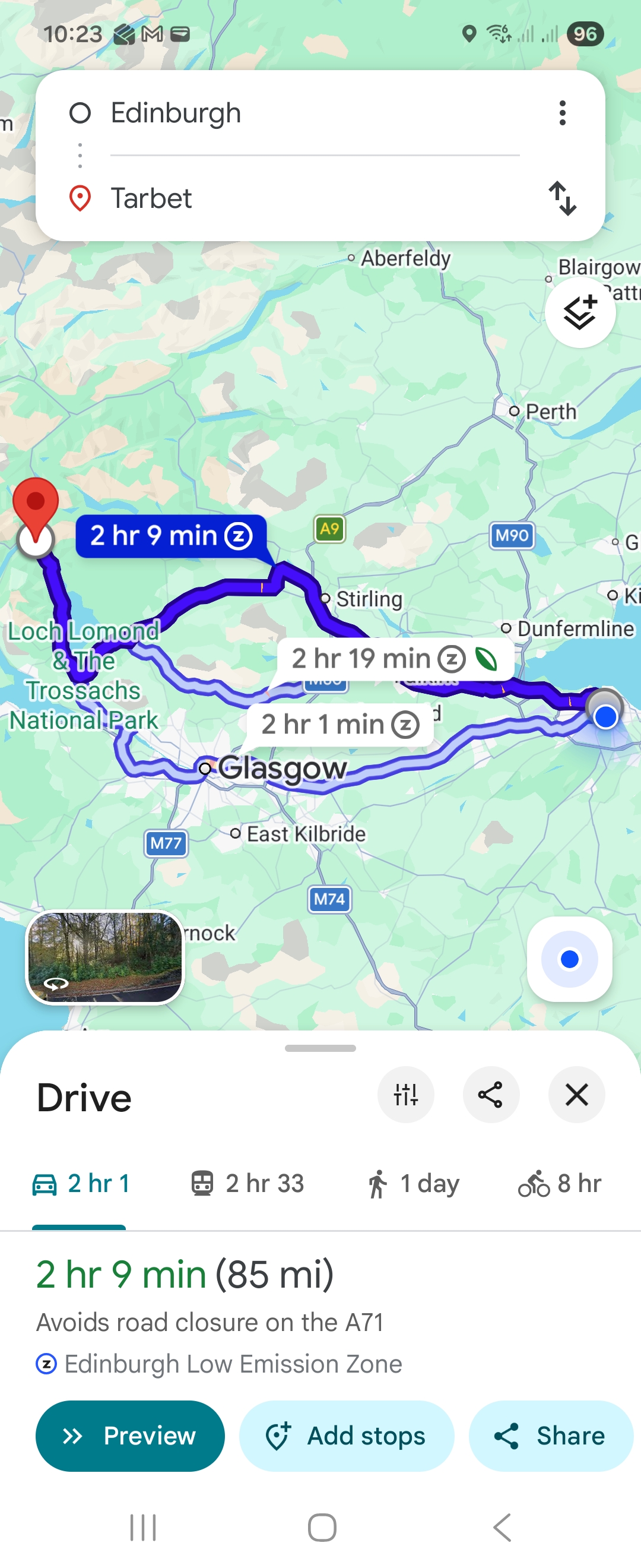
Your first day on the Road to the Isles.
After leaving Edinburgh you climb through the Trossachs and drop down to the eastern shore of Loch Lomond. The moment the loch appears is always special — a vast sheet of water framed by steep, wooded hills that already feel a world away from the city.
You’ll spend the afternoon wandering the shoreline or taking a short cruise if the mood takes you. There’s a quiet, reflective quality here that sets the tone for the whole journey. Many people say this is the day the trip really begins to feel like a pilgrimage.
You’ll stay on the western shore tonight, either in Tarbet or a little further north. It’s a gentle introduction to the landscapes that will only grow more dramatic as you head west.

Loch Lomond is the largest freshwater loch in Britain and the gateway to the western Highlands. The southern end is gentler and more wooded, while the northern reaches feel wilder and more remote.
Where to stay tonight
Well-run site right on the loch with excellent facilities and easy access to the water.
Several permitted wild camping spots along the western shore, especially north of Tarbet.
The Road to Mallaig – Glenfinnan Viaduct
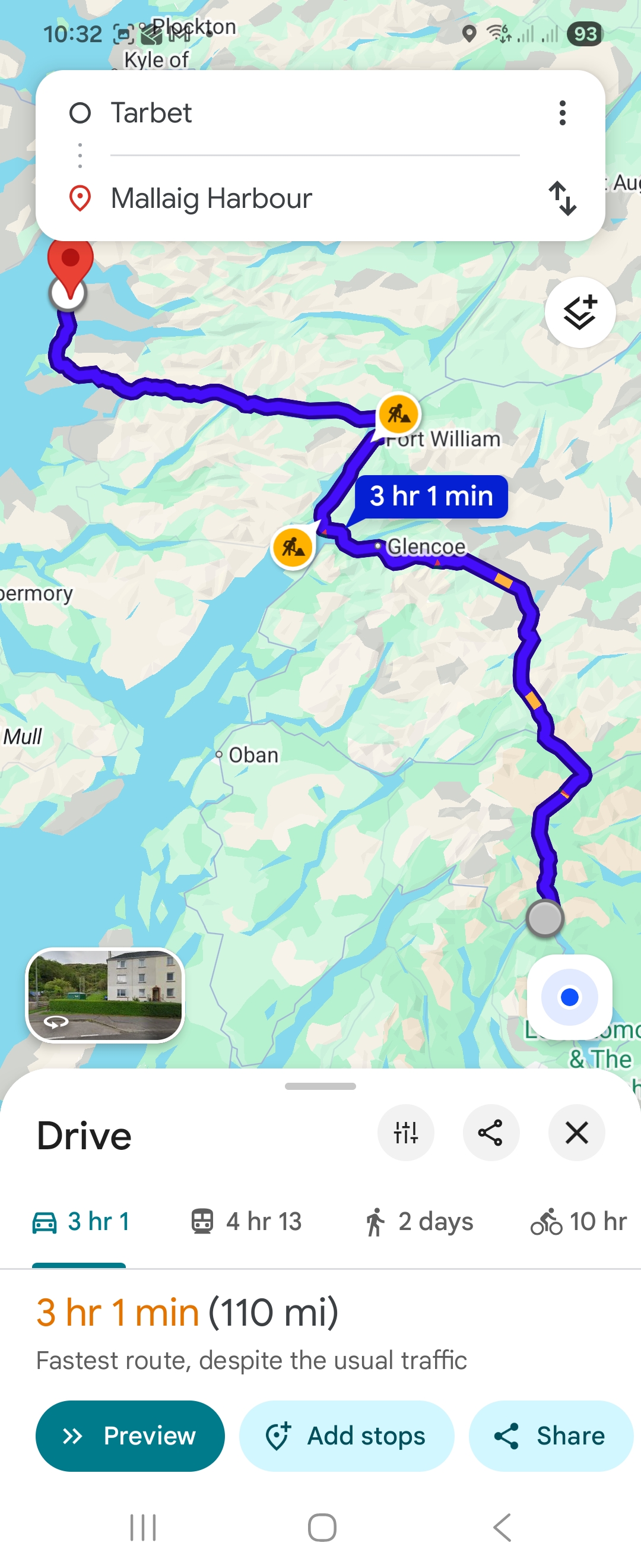
The long drive west.
Today you leave Loch Lomond and head deep into the Highlands, passing through Glencoe and then Fort William itself. You don’t stop for the night — you keep going west along the shore of Loch Eil toward the sea.
Midway along this stretch you pull over at Glenfinnan Viaduct, the famous curved railway bridge made world-famous by the Harry Potter films. There’s a good viewpoint where you can watch the Jacobite steam train cross if the timings work, or simply stand and take in the sweeping view back across the glen. It’s a proper, atmospheric pause in the middle of the journey.
From there the road continues through Arisaig and Morar — some of the most beautiful coastal scenery in Scotland — all the way to Mallaig, the end of the line.
You’ll stay in Mallaig tonight, right by the harbour. It’s a proper working fishing port with a real sense of being at the edge of the mainland. Perfect for a quiet evening before the ferry to Skye tomorrow morning.

The drive from Loch Lomond all the way to Mallaig is one of the great scenic routes in Scotland. The stop at Glenfinnan Viaduct is the perfect midpoint.
Where to stay tonight
Simple, friendly site with good facilities right by the harbour and ferry terminal.
Several beautiful wild camping spots along the coast between Glenfinnan and Mallaig.
Ferry to Skye and the North Coast
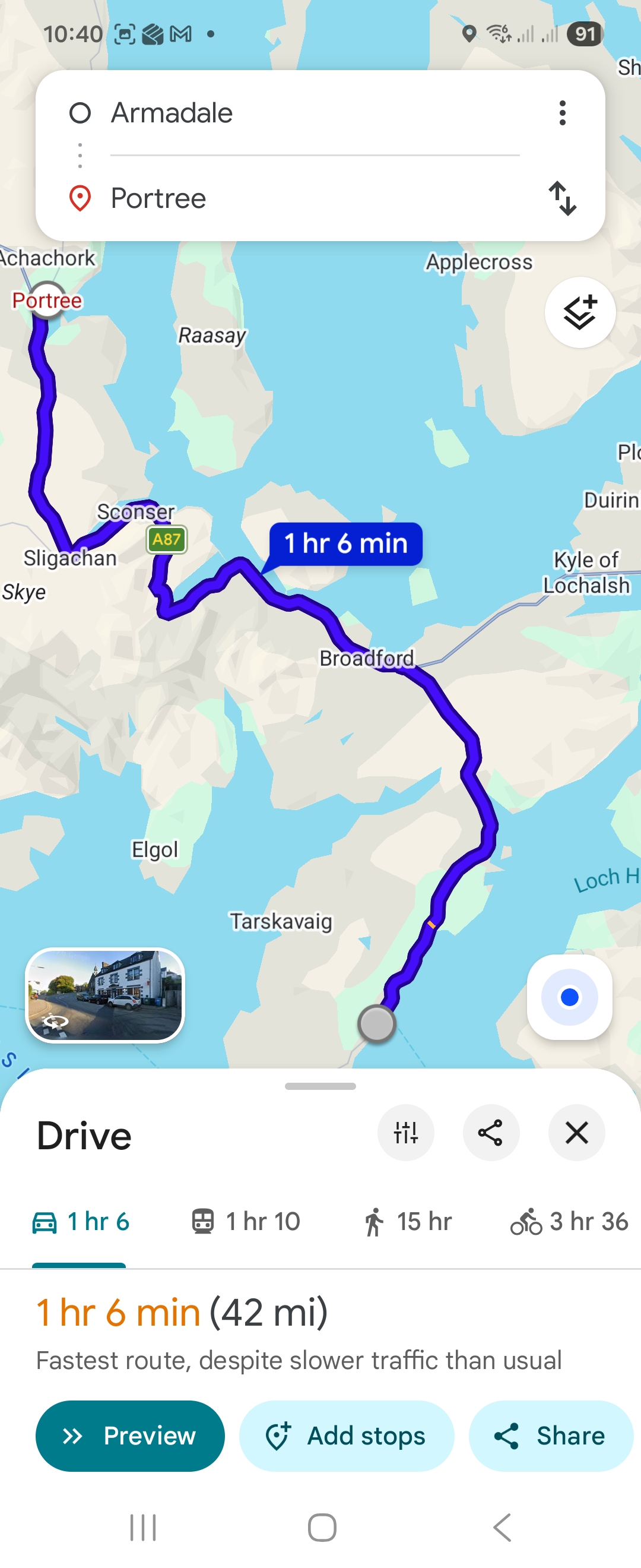
Today you take the ferry to Skye.
Mallaig has a proper end-of-the-road feeling. The short distance to the ferry terminal is beautiful, and the crossing itself is short but deeply atmospheric — the mountains of Skye rising ahead of you as you leave the mainland behind.
Once on the island you head north along the coast road to the Trotternish peninsula. The landscape changes quickly. By the time you reach Staffin or Portree you’re properly in the north of Skye, where the sea cliffs and strange rock formations begin to appear.
You’ll stay in the north tonight. The light here in the evening and early morning is extraordinary. It’s a good place to settle in and feel the different rhythm of island life.

The Mallaig to Armadale ferry is the classic “Road to the Isles” crossing. The short sea passage feels like a proper transition between worlds.
Where to stay tonight
Popular, well-run site with good facilities just outside Portree.
Several excellent wild camping spots along the northern Trotternish coast with dramatic sea views.
The Quiraing and Trotternish
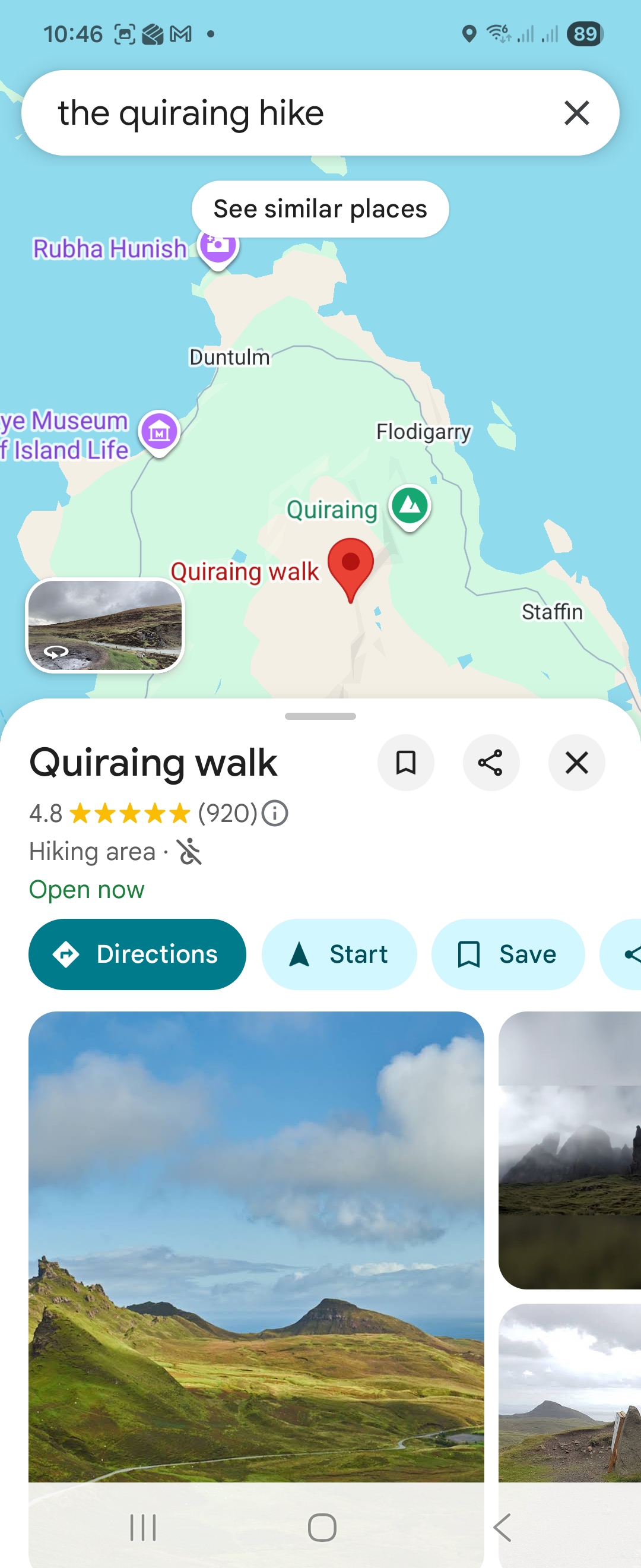
A day for walking and wondering.
Today you explore the northern tip of Skye properly. The Quiraing is the highlight — a huge, ancient landslip of pinnacles, plateaus and hidden valleys that feels profoundly ancient and slightly unreal. Even on a busy day there are corners where you can find solitude.
You can walk the classic Quiraing circuit or simply sit and watch the light move across the rock. Many people also visit the Old Man of Storr and the Kilt Rock waterfall on the same day. The whole peninsula has a raw, elemental quality that stays with you.
You’ll stay in the north again tonight. This gives you the chance to watch the sunset from the cliffs or take a quiet evening walk along the shore. It’s one of the most memorable nights of the whole tour.

The Trotternish peninsula is one of the most geologically dramatic places in Britain. The Quiraing is a vast, otherworldly landslip that feels like another planet.
Where to stay tonight
Small, peaceful site with incredible views over Staffin Bay and the sea cliffs.
Wild camping is possible in several high corries and along the northern coast (leave no trace).
The Cuillin Mountains and the Fairy Pools
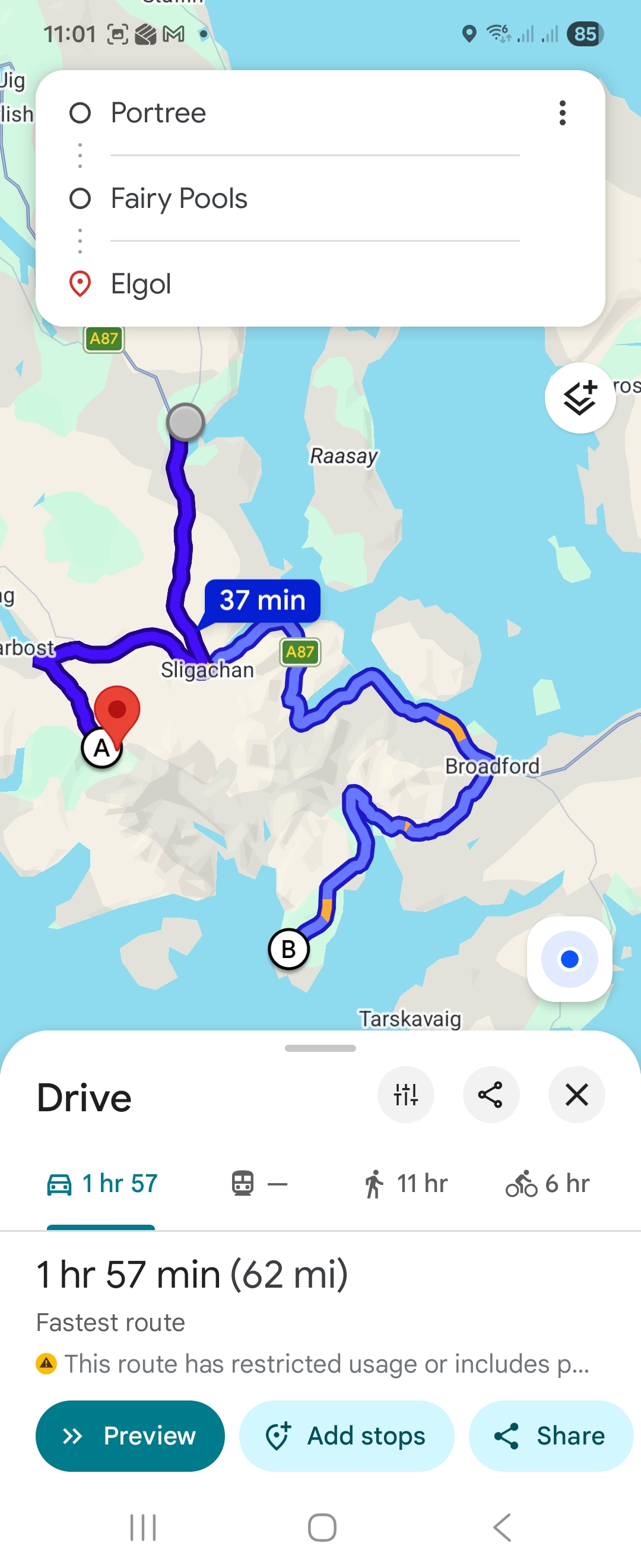
You head south today into the dramatic heart of the Cuillins.
The drive from Portree quickly brings the jagged Black Cuillin into view. A stop at Sligachan gives you the classic wide panorama of the mountains.
The real highlight is the short detour west into Glen Brittle to the Fairy Pools — a series of crystal-clear turquoise pools and waterfalls tumbling down the glen against the dark rock of the Cuillins. The walk is gentle and the setting is genuinely magical. Lots of people say this is one of the most special places on the whole tour.
If you fancy it, Talisker Distillery in Carbost is only a few minutes away from the Fairy Pools and makes a lovely contrast — a proper Skye whisky with a big maritime, peaty character. Tours are excellent if you want to book one.
After the west side you head back east and stay around Broadford tonight, ready for the ferry to Mull tomorrow.


The Fairy Pools are one of the most beautiful and otherworldly spots on Skye. The short walk up Glen Brittle feels almost sacred.
Where to stay tonight
Friendly site on the edge of the village with good facilities and easy access to the south.
Wild camping is possible in Glen Brittle near the Fairy Pools or with incredible views toward the Cuillin from the Elgol area.
Crossing to Mull via the Atlantic Bridge and Kilchoan
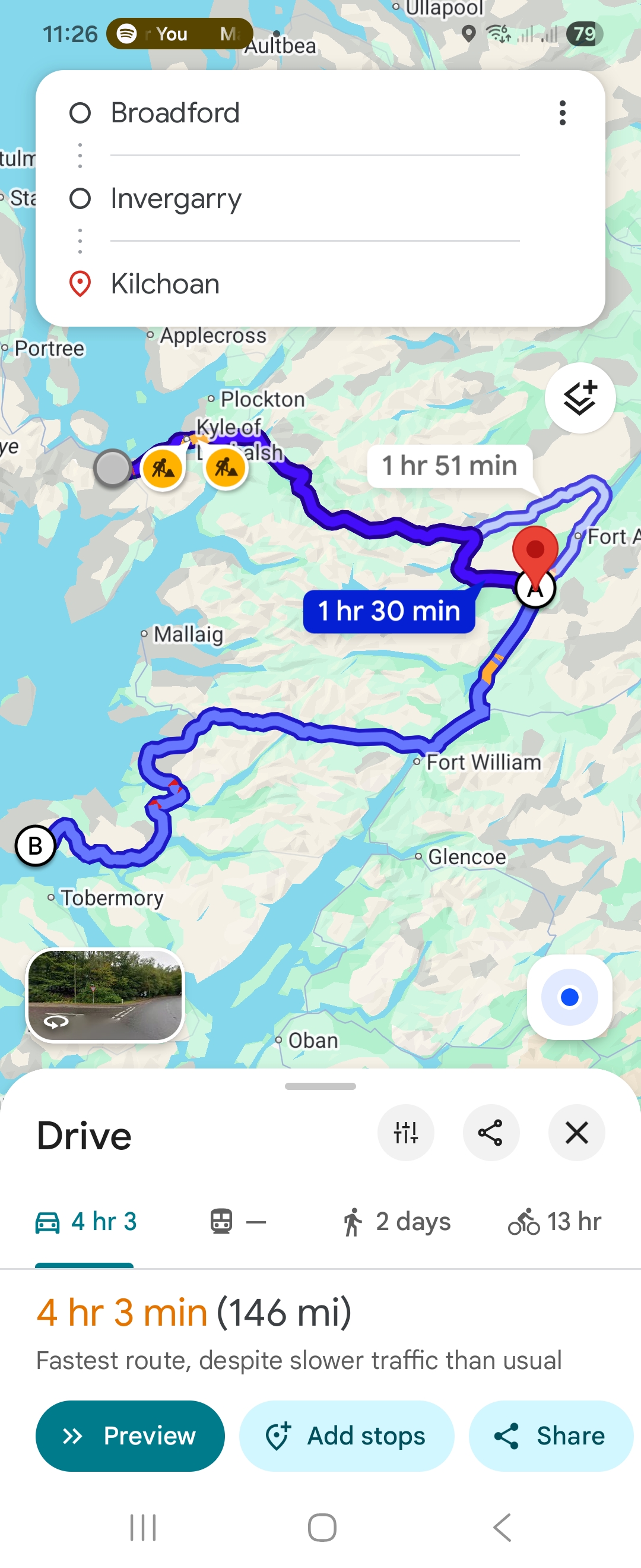
You leave Skye today and head for Mull.
The first part of the journey takes you over the Atlantic Bridge at Kyleakin — a clean, simple crossing that still feels like a proper farewell to the island. From there you head inland via Invergarry, cutting through the Great Glen country before turning west again toward the remote Ardnamurchan peninsula.
The drive becomes increasingly quiet and beautiful as you go. By the time you reach Kilchoan you’re deep in one of the wildest corners of the mainland. The small ferry from here to Tobermory is intimate and atmospheric — a very different experience from the big Oban boat.
The best part is that you sail straight into Tobermory harbour itself. No long drive up the island from Craignure — you step off the ferry right in the middle of the town you’ll be staying in.
You have three nights on Mull. Tonight you settle in properly — a walk along the colourful harbour front, maybe a drink and some fresh seafood, and an early night. The island is yours for the next couple of days.

Today you leave Skye via the Atlantic Bridge, then take the quieter inland route via Invergarry before the small ferry from Kilchoan lands you directly in Tobermory.
Where to stay tonight
Popular site with good facilities a short walk from the colourful harbour town.
Wild camping is possible in many quiet bays and glens on the island (always follow the Scottish Outdoor Access Code).
A Day on Mull
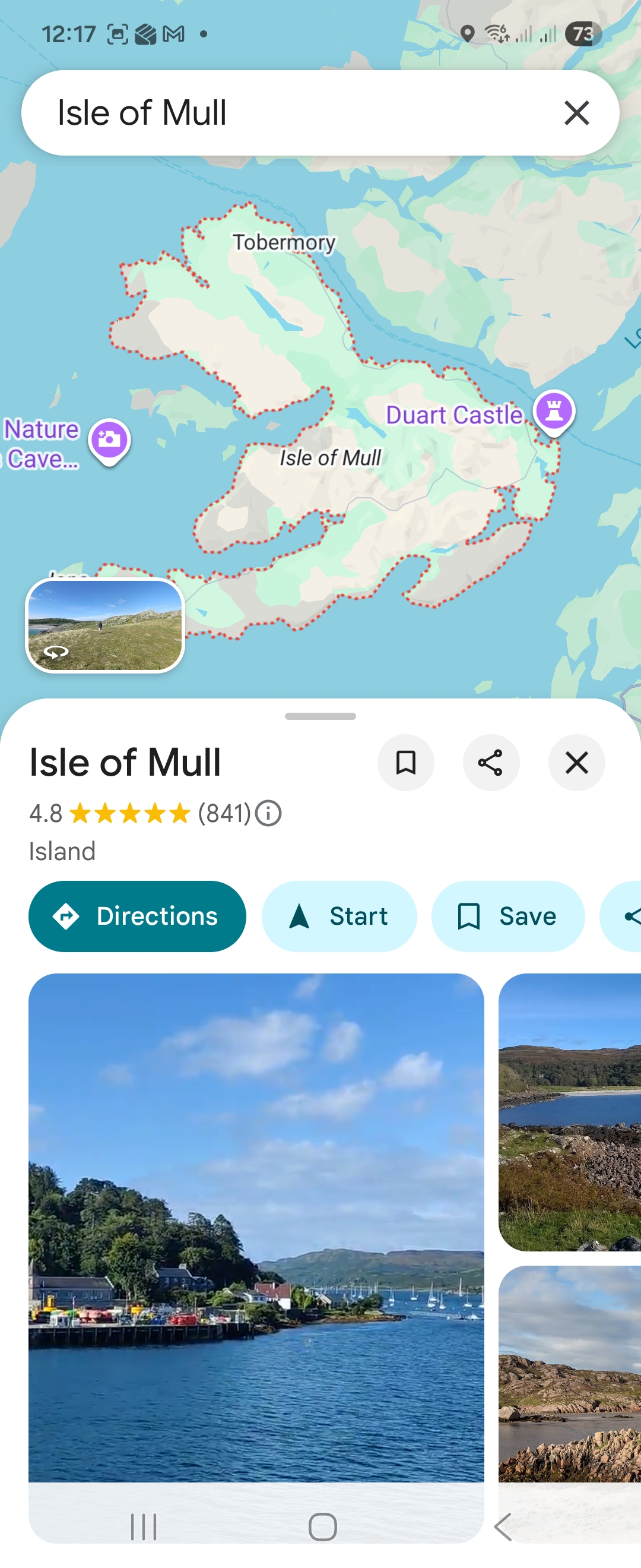
A day to wander and absorb.
Mull rewards slow travel. You can head west to the white sands of Calgary Bay, visit the beautiful little village of Dervaig, or drive the single-track roads around the Ross of Mull. There are eagles, otters, and a surprising number of standing stones and ancient sites.
Many people use today for gentle walking, visiting one of the small distilleries, or simply sitting by a beach with a book. There’s no pressure to “do” everything. The island invites you to slow down.
You stay in or near Tobermory again tonight. It’s a lovely base and leaves you well positioned for the boat trip tomorrow.

Mull is a big, gentle island with a huge variety of landscapes — from white sand beaches to steep mountain glens and quiet sea lochs.
Where to stay tonight
The same friendly base as the night before, with easy access back into town.
Beautiful wild camping near the famous white sand beach if you want a more remote night.
Iona and Staffa – The Pilgrimage
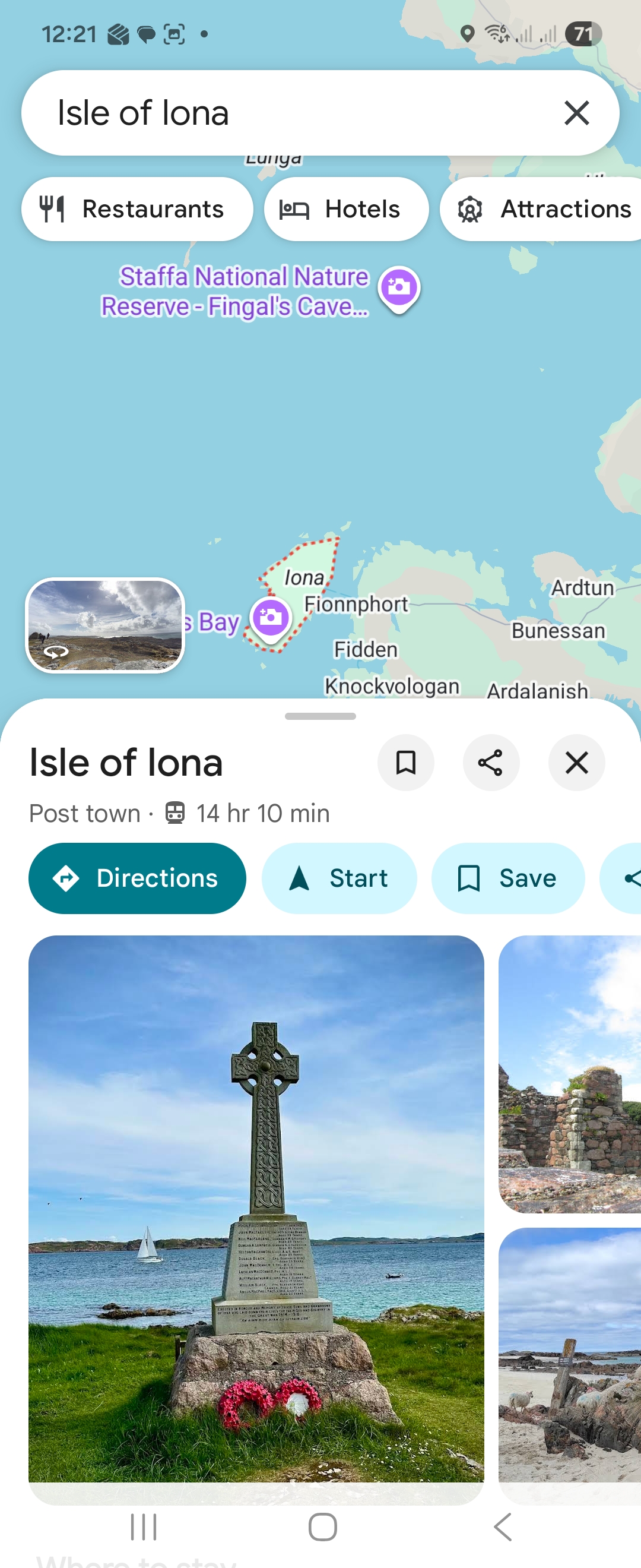
The day many guests say is the reason they came.
You travel to the south-west of Mull and take a full-day boat trip that visits both Iona and the island of Staffa. On Iona you can visit the ancient abbey where St Columba founded his monastery in 563, and walk the white sands of the Bay at the Back of the Ocean.
The highlight for most is Staffa and Fingal’s Cave — the extraordinary basalt columns and the haunting sound of the sea inside the cave. It is genuinely otherworldly.
The whole day has a quiet, reflective quality. Even on a busy boat there are moments of real stillness. Many people describe it as one of the most moving experiences they’ve had in Scotland.
You return to Tobermory in the evening. It’s a long but deeply rewarding day.


The boat trip to Iona and Staffa is the spiritual and emotional high point of the tour for many people. Iona has been a place of pilgrimage for over 1,400 years.
Where to stay tonight
Return to the same comfortable base after the long sea day.
Some people choose to stay closer to the departure point for the boat day.
Return to Edinburgh
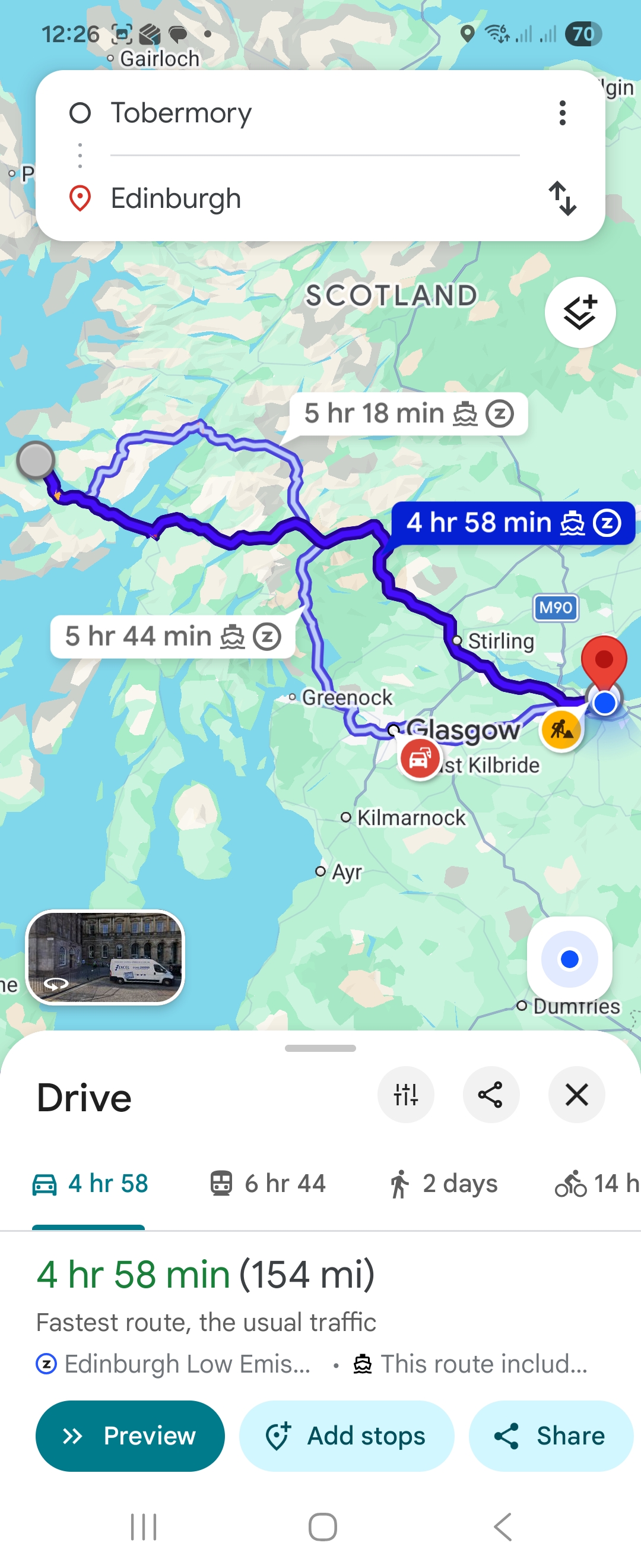
The final day.
You leave Mull on the morning ferry to Oban, then point the van east across Scotland. The journey takes you through some beautiful countryside, but there are no scheduled stops or activities today. The aim is to be back in Edinburgh by around 5pm.
It’s a chance to sit with everything you’ve seen and felt over the past nine days — the lochs, the mountains, the ferries, the islands, and that deep sense of journey that the Road to the Isles always seems to carry.
You’ll arrive home with salt on your skin, a head full of light and landscape, and the quiet satisfaction that comes from having done the route the right way round.
A pure travel day. The ferry from Craignure to Oban followed by the long drive across the country brings you home by late afternoon.
Where to stay tonight
The Shores of Loch Lomond
Your first day on the Road to the Isles.
After leaving Edinburgh you climb through the Trossachs and drop down to the eastern shore of Loch Lomond. The moment the loch appears is always special — a vast sheet of water framed by steep, wooded hills that already feel a world away from the city.
You’ll spend the afternoon wandering the shoreline or taking a short cruise if the mood takes you. There’s a quiet, reflective quality here that sets the tone for the whole journey. Many people say this is the day the trip really begins to feel like a pilgrimage.
You’ll stay on the western shore tonight, either in Tarbet or a little further north. It’s a gentle introduction to the landscapes that will only grow more dramatic as you head west.
Loch Lomond is the largest freshwater loch in Britain and the gateway to the western Highlands. The southern end is gentler and more wooded, while the northern reaches feel wilder and more remote.
Where to stay tonight
Well-run site right on the loch with excellent facilities and easy access to the water.
Several permitted wild camping spots along the western shore, especially north of Tarbet.
The Road to Mallaig – Glenfinnan Viaduct
The long drive west.
Today you leave Loch Lomond and head deep into the Highlands, passing through Glencoe and then Fort William itself. You don’t stop for the night — you keep going west along the shore of Loch Eil toward the sea.
Midway along this stretch you pull over at Glenfinnan Viaduct, the famous curved railway bridge made world-famous by the Harry Potter films. There’s a good viewpoint where you can watch the Jacobite steam train cross if the timings work, or simply stand and take in the sweeping view back across the glen. It’s a proper, atmospheric pause in the middle of the journey.
From there the road continues through Arisaig and Morar — some of the most beautiful coastal scenery in Scotland — all the way to Mallaig, the end of the line.
You’ll stay in Mallaig tonight, right by the harbour. It’s a proper working fishing port with a real sense of being at the edge of the mainland. Perfect for a quiet evening before the ferry to Skye tomorrow morning.
The drive from Loch Lomond all the way to Mallaig is one of the great scenic routes in Scotland. The stop at Glenfinnan Viaduct is the perfect midpoint.
Where to stay tonight
Simple, friendly site with good facilities right by the harbour and ferry terminal.
Several beautiful wild camping spots along the coast between Glenfinnan and Mallaig.
Ferry to Skye and the North Coast
Today you take the ferry to Skye.
Mallaig has a proper end-of-the-road feeling. The short distance to the ferry terminal is beautiful, and the crossing itself is short but deeply atmospheric — the mountains of Skye rising ahead of you as you leave the mainland behind.
Once on the island you head north along the coast road to the Trotternish peninsula. The landscape changes quickly. By the time you reach Staffin or Portree you’re properly in the north of Skye, where the sea cliffs and strange rock formations begin to appear.
You’ll stay in the north tonight. The light here in the evening and early morning is extraordinary. It’s a good place to settle in and feel the different rhythm of island life.
The Mallaig to Armadale ferry is the classic “Road to the Isles” crossing. The short sea passage feels like a proper transition between worlds.
Where to stay tonight
Popular, well-run site with good facilities just outside Portree.
Several excellent wild camping spots along the northern Trotternish coast with dramatic sea views.
Return to Edinburgh
The final day.
You leave Skye to point the van east across Scotland. The journey takes you through some beautiful countryside, but there are no scheduled stops or activities today. The aim is to be back in Edinburgh by around 5pm.
It’s a chance to sit with everything you’ve seen and felt over the past few days — the lochs, the mountains, the ferries, the islands, and that deep sense of journey that the Road to the Isles always seems to carry.
You’ll arrive home with salt on your skin, a head full of light and landscape, and the quiet satisfaction that comes from having done the route the right way round.
A pure travel day. The take the atlantic bridge back to the mainland followed by the long drive across the country brings you home by late afternoon.
Where to stay tonight
Ready to book Road to the Isles?
Get in touch to check availability and shape your perfect trip.
Enquire About This TourThis tour uses vans that meet our full hardware standard. See what that includes →
More questions? Browse our FAQ →